

Research Focus: Incretin Receptor Pharmacology • Metabolic Signaling • GPCR Research
Compound Class: Investigational GLP-1R / GIPR / GCGR Triple Receptor Agonist
Mechanism of Action
Retatrutide (also identified in the literature as LY3437943) is a synthetic single-chain peptide engineered to act as an agonist at three distinct class B G protein-coupled receptors: the glucagon-like peptide-1 receptor (GLP-1R), the glucose-dependent insulinotropic polypeptide receptor (GIPR), and the glucagon receptor (GCGR).
Each of these receptors belongs to the secretin-like (class B) GPCR family and couples primarily to Gs proteins. Receptor activation stimulates adenylyl cyclase, increasing intracellular cyclic adenosine monophosphate (cAMP) and initiating downstream protein kinase A (PKA) and exchange protein activated by cAMP (Epac) signaling.
The three receptors are distributed differently across tissues, which is the principal reason retatrutide is of interest as a pharmacological research tool:
GLP-1R is expressed on pancreatic beta cells and in regions of the central nervous system, and has been extensively characterized in insulin secretion and central metabolic signaling research.
GIPR is expressed on pancreatic islet cells and adipose tissue, and participates in incretin-mediated signaling alongside GLP-1R.
GCGR is expressed prominently in hepatocytes and has been characterized in research on hepatic glucose output, lipid handling, and energy expenditure signaling.
Because a single molecule engages all three receptor systems, retatrutide provides an experimental model for investigating how simultaneous, balanced activation of multiple incretin and glucagon receptor pathways differs from selective agonism at any one of them.
The peptide incorporates structural modifications, including a fatty acid moiety, intended to promote albumin association and extend the molecule’s circulating half-life relative to native incretin peptides.
Product Overview
Retatrutide 60 mg is a synthetic multi-receptor peptide agonist supplied as a research compound.
Native incretin hormones – GLP-1 and GIP – are released from enteroendocrine cells of the gastrointestinal tract and act as part of the entero-insular axis. Glucagon, by contrast, is secreted from pancreatic alpha cells and acts largely on hepatic receptors. These three peptide systems have historically been studied as separate signaling axes.
Retatrutide was developed to engage all three receptors within a single molecular entity, and it has become a significant subject in contemporary metabolic and GPCR pharmacology research.
It is important to note that retatrutide is an investigational molecule. It has not received regulatory approval in any jurisdiction, and it is not the active ingredient of any approved pharmaceutical product.
Primary Biological Targets & Pathways
- Glucagon-like peptide-1 receptor (GLP-1R)
- Glucose-dependent insulinotropic polypeptide receptor (GIPR)
- Glucagon receptor (GCGR)
- Class B G protein-coupled receptors
- Gs protein signaling
- Adenylyl cyclase
- Cyclic AMP (cAMP)
- Protein kinase A (PKA)
- Epac signaling
- Pancreatic islet cell signaling
- Hepatic receptor signaling
- Adipose tissue receptor signaling
- Entero-insular axis
- Central metabolic signaling pathways
Primary Research Applications
Retatrutide has been investigated in research involving:
- Incretin receptor pharmacology
- Multi-receptor agonist design
- GLP-1 receptor signaling
- GIP receptor signaling
- Glucagon receptor signaling
- GPCR structure-activity relationships
- Biased and balanced receptor agonism
- Peptide engineering and half-life extension
- Metabolic signaling research
- Hepatic metabolic pathways
- Adipose tissue biology
- Comparative incretin pharmacology
Scientific Evidence
Evidence Level: ★★★☆☆ (3 of 5)
Retatrutide’s receptor pharmacology has been characterized in published preclinical work, and the molecule has progressed into human clinical investigation as an investigational agent.
However, its evidence base should be understood as considerably earlier-stage than that of approved incretin pharmaceuticals. Retatrutide remains investigational, its clinical development programme is ongoing, and it has not been evaluated by any regulatory authority for safety or efficacy.
As with all compounds in this catalog, findings reported for the pharmaceutical-grade molecule under controlled clinical conditions should not be interpreted as establishing the identity, purity, quality, or behaviour of independently manufactured research-grade material.
Research Highlights
Published research has reported that retatrutide:
- Functions as an agonist at GLP-1R, GIPR, and GCGR.
- Engages three distinct class B GPCRs within a single peptide sequence.
- Activates Gs-coupled, cAMP-dependent signaling at each target receptor.
- Incorporates structural modification intended to extend circulating half-life.
- Provides an experimental model for comparing single-, dual-, and triple-receptor incretin agonism.
- Has been characterized in preclinical receptor binding and signaling studies.
- Has entered human clinical investigation as an investigational molecule.
- Remains without regulatory approval in any jurisdiction.
Scientific Background
The incretin effect describes the observation that orally delivered nutrients produce a greater insulin response than an equivalent intravenous glucose load. This effect is mediated principally by GLP-1 and GIP, released from intestinal enteroendocrine cells.
Pharmacological research in this area initially focused on selective GLP-1 receptor agonism. Subsequent work established that co-agonism at GIPR alongside GLP-1R produced a signaling profile distinct from GLP-1R activation alone.
Addition of glucagon receptor agonism represents a further extension of this approach. GCGR signaling is associated in the literature with hepatic glucose and lipid handling and with energy expenditure pathways – a profile that differs substantially from the islet-centred activity of the incretin receptors.
Retatrutide therefore sits at the intersection of three separately characterized receptor systems, and its principal research value lies in allowing those systems to be investigated under simultaneous activation rather than in isolation.
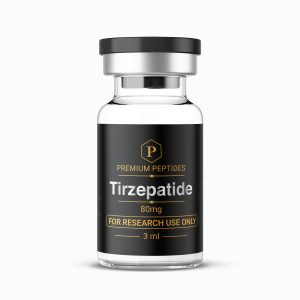
Retatrutide vs. Tirzepatide
Both compounds are multi-receptor incretin agonists, but they are not interchangeable and differ in an important respect.
Retatrutide
- Triple agonist: GLP-1R, GIPR, GCGR
- Investigational molecule
- No regulatory approval in any jurisdiction
- Clinical development ongoing
Tirzepatide
- Dual agonist: GIPR and GLP-1R
- No glucagon receptor agonism
- Active ingredient of approved pharmaceutical products for specific indications
- Extensive completed clinical characterization
The addition of glucagon receptor activity is the defining pharmacological distinction between the two molecules and should not be overlooked when the compounds are compared.
Research Use Disclaimer
For Laboratory Research Use Only.
This product is intended exclusively for scientific, analytical, and laboratory research. Information presented describes the molecular pharmacology of retatrutide and findings reported in scientific literature, and should not be interpreted as instructions for administration or as expected outcomes in individuals.
Retatrutide is an investigational compound. It is not approved by the U.S. Food and Drug Administration or any other regulatory authority, and it is not the active ingredient of any approved pharmaceutical product. This product is not intended for human consumption, therapeutic administration, diagnosis, treatment, cure, or prevention of disease.
References
- Coskun T, et al. Research characterizing LY3437943, a GIP, GLP-1 and glucagon receptor triagonist.
- Urva S, et al. Early-phase clinical investigation of retatrutide pharmacokinetics and pharmacodynamics.
- Jastreboff AM, et al. Clinical investigation of retatrutide in metabolic research settings.
- Peer-reviewed literature examining class B GPCR pharmacology and incretin receptor signaling.
- Published research on multi-receptor peptide agonist design and structure-activity relationships.


Reviews
There are no reviews yet.